
What Children Really Want to Know About Ancient Egypt

Why Ancient Egypt Captures a Child’s Attention So Quickly
Few parts of history pull children in as quickly as Ancient Egypt. Long before they understand dates, dynasties, or geography, they already recognize pyramids, mummies, pharaohs, and hieroglyphs. Something about Ancient Egypt immediately feels larger than ordinary history. It is distant enough to seem mysterious, yet visual enough to feel alive. A child may not remember where Egypt is on a map at first, but they remember the shape of a pyramid, the image of a golden mask, or the idea that people wrote with pictures.
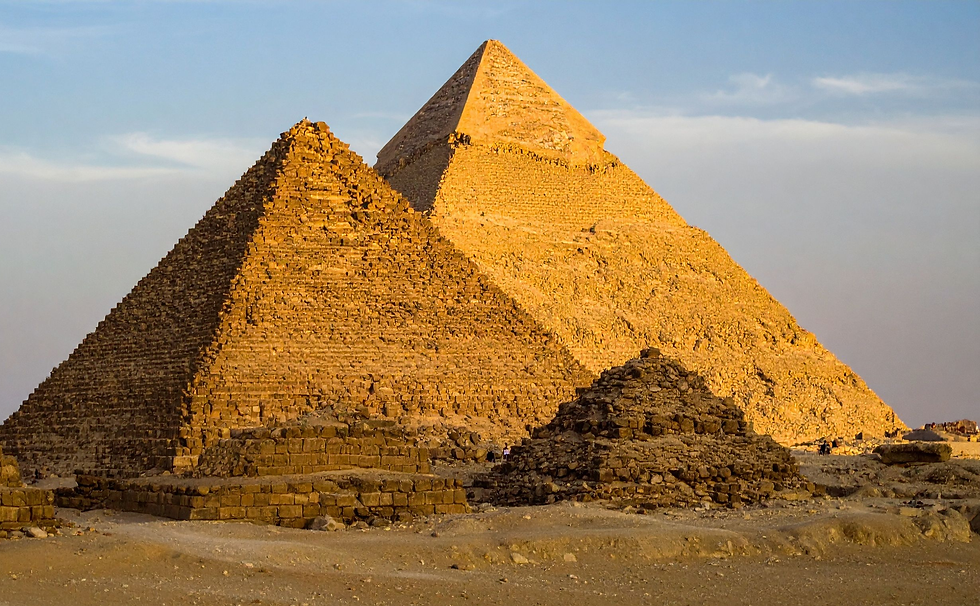
Part of that fascination comes from contrast. Ancient Egypt feels both familiar and strange at the same time. It was a real civilization with cities, rulers, laws, farming, trade, and family life, yet much of what children first notice seems unlike anything in the modern world. Kings were buried inside giant stone tombs. Walls were covered with symbols instead of letters. Bodies were carefully preserved for the afterlife. Gods were shown with animal heads. Even before children understand the deeper meaning behind these things, they sense that this world followed different rules.
That immediate contrast creates curiosity. Children do not simply look at Ancient Egypt and see old buildings. They begin asking questions almost immediately.
Why Pyramids Are Only the Beginning
Adults often assume that pyramids are what interest children most, and they certainly attract attention first. The size alone is enough to raise questions. Children want to know how people moved stones that large, how long it took to build them, why they were built in the desert, and how anyone managed to create structures that still stand thousands of years later.
But once the first question is answered, the curiosity usually shifts quickly. The pyramid itself becomes less important than what it represents. Who was buried inside? Why did one person need such a huge tomb? Why were treasures buried with them? What did people believe would happen after death?
This is often the moment when children move from monuments to people. They begin to understand that pyramids are not simply buildings. They are evidence of beliefs, power, labor, engineering, and social organization. A child asking how pyramids were built is already stepping into questions about mathematics, tools, planning, and leadership without realizing it.
That is why Ancient Egypt holds attention so well. One visible object opens the door to many different subjects at once.
Why Mummies Raise More Questions Than Fear
Mummies often become the second major point of fascination, but what children usually want is not fear. Adults sometimes assume mummies attract children because they sound frightening, yet most children are far more interested in the practical side of the idea than adults expect.
Why did people preserve bodies? How did they do it? Why remove organs? Why wrap the body so carefully? Why place it inside several layers of coffins? Why keep cats, birds, or crocodiles as mummies, too?
These questions are powerful because mummification immediately shows children that Ancient Egyptians thought about life and death differently. The process only makes sense when connected to belief, which naturally leads children into understanding the afterlife, gods, judgment, and the idea that death was not seen as an ending in the way many modern societies describe it.
This is also one reason children remember mummification so clearly. It is unusual, visual, and deeply connected to belief. A child does not simply memorize the process; the child wants to understand why people would go to such lengths.
Why Hieroglyphs Feel Like a Secret Code
Another part of Ancient Egypt that children almost always respond to is writing. Hieroglyphs immediately look different from anything they know. Instead of letters, there are birds, eyes, snakes, hands, tools, and animals. To many children, it feels less like reading and more like discovering a hidden code.

That reaction matters because it creates a natural bridge into one of history’s most important ideas: writing systems were invented, changed, and developed differently across civilizations. A child looking at hieroglyphs quickly asks how people learned them, who could write, whether every symbol meant a word, and how modern archaeologists learned to read them again.
In many cases, this becomes a child’s first real encounter with the idea that language itself has a history. Writing is no longer something ordinary and fixed; it becomes something invented by people trying to record their world. That alone often makes Ancient Egypt feel more alive than many other historical periods.
Why Children Want to Know About Real Daily Life
What children often ask after the famous topics is something adults do not always expect: what was everyday life actually like?
Once pyramids, pharaohs, and mummies are introduced, children begin wondering whether ordinary children existed in that world as well. Did they go to school? What did they eat? Did they have toys? Did they have pets? What did homes look like? Did they swim in the Nile? What happened when the river flooded?
These questions are important because they move history away from monuments and toward human life. A child begins understanding that Ancient Egypt was not made only of kings and temples. It was also farmers, builders, fishermen, bakers, artists, scribes, and families living ordinary lives under extraordinary systems.
This often makes history easier to understand because children naturally search for connections. They want to find the part of the ancient world that feels human enough to compare with their own.
Why Ancient Egypt Stays With Children Longer Than Expected
Ancient Egypt stays in memory because it combines a strong visual identity with unanswered questions. A pyramid can be seen in a second and remembered for years. A golden burial mask, a painted tomb wall, or a line of hieroglyphs leaves a clear image that children can easily hold onto. But those images stay powerful because they always suggest something larger behind them.
A pyramid suggests power. A mummy suggests belief. Hieroglyphs suggest knowledge. A pharaoh suggests authority. A tomb suggests mystery. The deeper children go, the more they realize Ancient Egypt is not just about strange objects from the past. It is about how an entire civilization explained life, death, order, and survival in a difficult environment shaped by the Nile.
That is why children often return to Ancient Egypt repeatedly. The first fascination begins with something visual, but what keeps them interested is the number of questions that remain open.

Why Ancient Egypt Teaches More Than History
One reason Ancient Egypt works so well in learning is that it never stays inside one subject. A child reading about Ancient Egypt quickly moves through history, geography, architecture, religion, writing, engineering, farming, trade, and archaeology almost without noticing the transitions.
A question about pyramids becomes mathematics. A question about mummies becomes biology and belief. A question about hieroglyphs becomes language and communication. A question about the Nile becomes geography and climate.
This is why Ancient Egypt remains one of the strongest entry points into broader learning. It does not simply offer facts from the past. It shows children how different parts of human life connect. And perhaps that is why children rarely stop with one question. Ancient Egypt almost always gives them another one waiting behind the first.


